
Bangladeshi Islamic Scholars Speak Out Against Extremism
- আপডেট টাইম : বুধবার, ২৪ ডিসেম্বর, ২০২৫
Religion Desk
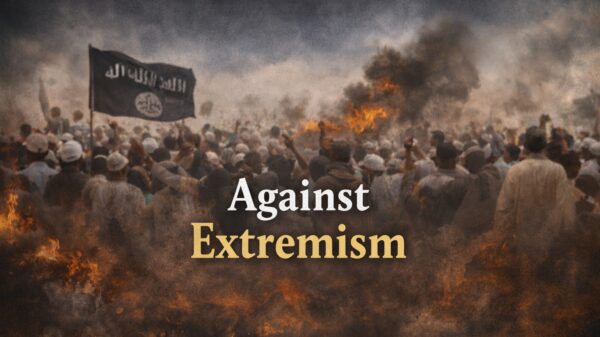
Extremism carried out in the name of religion has remained a persistent concern in Bangladesh, particularly as sporadic incidents of hate speech, mob violence and calls for vigilantism continue to surface. In recent years, the rapid spread of such narratives through social media platforms has intensified public debate on how Islam is being misused for political and ideological purposes. Against this backdrop, prominent Bangladeshi Islamic scholars have repeatedly spoken out, warning that violence and intolerance stand in direct contradiction to the core teachings of Islam.
Senior ulema across the country broadly agree that Islam is fundamentally a religion of peace, justice and moral responsibility. According to them, individuals or groups who attempt to justify violence, issue threats or bypass the legal system under the banner of religion do not represent Islam in any authentic sense. Instead, such actions, they argue, distort religious teachings and contribute to fear, social fragmentation and instability.
Several scholars interviewed in recent months have described modern extremist movements as driven by what they term a “Kharijite mentality.” The reference is to a historical sect that emerged in the early period of Islam and became notorious for declaring other Muslims unbelievers and legitimizing violence against them. Contemporary extremist ideologies, the scholars say, reflect a similar mindset—marked by rigid interpretations and a rejection of diversity within Islamic thought.
One issue that has particularly alarmed Islamic scholars is the growing tendency toward takfir, or the practice of declaring fellow Muslims non-believers. Senior religious figures caution that Islamic tradition treats such accusations as extremely serious. Prophetic teachings warn that falsely labeling another Muslim an unbeliever is a grave sin. Yet extremist elements, they note, routinely apply such labels to democracy-supporting Muslims, religious minorities and ideological opponents, often as a pretext for hostility or violence.
Islamic scholars have also been vocal in rejecting vigilantism. They emphasize that Islam does not permit individuals or crowds to act as judge, jury and executioner. Even in sensitive cases involving allegations of blasphemy or religious offense, they stress that judgment lies solely with the state and the courts. Referring to the life of the Prophet Muhammad (peace be upon him), scholars point out that he consistently upheld due process, evidence and restraint, never endorsing mob justice or extrajudicial punishment.
Many scholars link the spread of extremism to gaps in religious understanding, particularly among young people. Fragmented readings of the Qur’an and Hadith, limited exposure to Islamic jurisprudence and an overreliance on provocative online sermons have contributed to confusion, they say. As a result, religious leaders have increasingly emphasized the importance of comprehensive, context-aware Islamic education rooted in established scholarship.
The issue of responsibility in religious preaching has also drawn attention. Islamic scholars argue that those who speak from pulpits or online platforms bear a moral obligation to choose their words carefully. Incendiary language, glorification of violence or indirect encouragement of vigilantism, they say, is not only unlawful but also religiously unethical. A preacher’s duty, according to them, is to guide people toward moral conduct and social harmony, not to inflame passions.
Bangladeshi ulema have consistently rejected militant groups such as ISIS and Al-Qaeda, describing them as sources of fitna, or social and religious chaos. These organizations, scholars argue, have caused immense harm to Muslim communities worldwide while severely damaging the global image of Islam. Any attempt to justify or romanticize such groups is viewed as both dangerous and fundamentally un-Islamic.
Scholars also point to Bangladesh’s long-standing religious tradition as evidence that extremism is incompatible with the country’s social fabric. Islam in Bengal has historically been shaped by Sufi influences, cultural accommodation and coexistence with other faiths. For centuries, Muslims, Hindus, Buddhists and Christians have lived alongside one another. Extremist ideologies, many scholars contend, are largely imported and clash with this indigenous tradition.
On the question of how extremism should be addressed, Islamic scholars argue that law enforcement alone is insufficient. While acknowledging the role of security agencies, they stress the need for broader social engagement. Families, schools, mosques and the media, they say, must all play a role in challenging extremist narratives and promoting ethical values.
A number of religious leaders have also emphasized dialogue, particularly with younger generations. Suppressing questions or dismissing doubts, they warn, can push individuals further toward radical thinking. Open discussion, grounded in reasoned argument and credible scholarship, is seen as a more effective way to counter extremist ideas.
Issues of women’s rights and minority protection have likewise featured prominently in scholarly discussions. Islamic scholars reiterate that Islam guarantees dignity, safety and justice for all, including women and religious minorities. Acts of harassment, discrimination or violence carried out in the name of religion, they stress, have no basis in Islamic teachings.
With social media now playing a central role in shaping public opinion, scholars caution that extremist rhetoric can spread rapidly and unpredictably. A single post or video, they note, can incite unrest within minutes. Religious figures and ordinary users alike are therefore urged to exercise restraint and moral responsibility online, recognizing the real-world consequences of digital speech.
Some scholars have also called for gradual modernization in religious education. Alongside traditional Islamic sciences, they advocate incorporating history, philosophy, civic education and contemporary social studies. Such an approach, they believe, would equip students to critically assess extremist narratives and better understand the complexities of modern society.
Ultimately, Bangladeshi Islamic scholars present a consistent message: Islam cannot be equated with extremism or violence. Those who misuse religion to justify bloodshed, they argue, stand in opposition to Islamic values rather than in defense of them. Preserving Bangladesh’s tradition of peaceful coexistence, they say, requires moral clarity from religious leaders and collective vigilance from society.
By speaking out against extremism, the ulema aim to reclaim Islam from those who distort it for ideological ends. Their message is unequivocal—peace, justice and compassion are not optional ideals in Islam; they lie at the very heart of the faith.