
Minority Security and the Teachings of Islam
- আপডেট টাইম : শুক্রবার, ২৬ ডিসেম্বর, ২০২৫
Editor : Muhammad Zakir Hossain
The true measure of a civilized state is not limited to its economic progress or the shine of its infrastructure; rather, it lies in how well it ensures the security and dignity of its most vulnerable citizens.
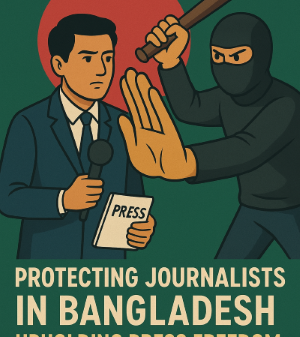
The safety of minority communities is therefore not an act of charity it is a fundamental human right and a moral as well as civic responsibility. Sadly, even today, minorities in many parts of the world live under fear and insecurity.
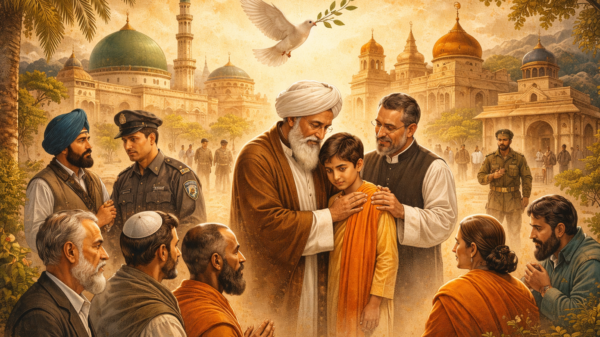
In this reality, the teachings of Islam present a deeply humane perspective—one that is not only for Muslims, but beneficial for all of humanity.
Islam is not a narrow religious doctrine; it is a comprehensive way of life. The Qur’an states that God created human beings into different nations and tribes so that they may know one another not hate one another. This diversity is the beauty of human society. Therefore, injustice toward minorities is not only a violation of human values; it is a direct contradiction of Islam’s core teachings.
In Islamic history, the most shining example of minority protection is found in the life and governance of the Prophet Muhammad (peace be upon him).
The Charter of Madinah is regarded as one of the world’s earliest written constitutions. It clearly guaranteed the rights and security of Muslims, Jews, and followers of other faiths. Religious freedom, protection of life and property, and justice were explicitly ensured. This proves that even while holding state power, Islam stood for coexistence—not suppression of minorities.
One hadith of the Prophet (peace be upon him) profoundly shakes our conscience:
“Whoever wrongs a non-Muslim, diminishes his rights, burdens him beyond his capacity, or takes something from him without consent I will stand against him on the Day of Judgment.”
This is not merely religious advice; it is a powerful moral declaration. The Prophet’s stance against injustice toward minorities is unmistakably clear.
Yet the question remains: if Islam speaks so clearly about minority protection, why do minorities still suffer insecurity in some Muslim majority societies? The answer lies not in Islam, but in our failures.
Too often, we use religion to provoke emotion, while failing to embody its true teachings. When religion is detached from morality, it becomes a tool of oppression this distortion belongs to people, not to Islam.
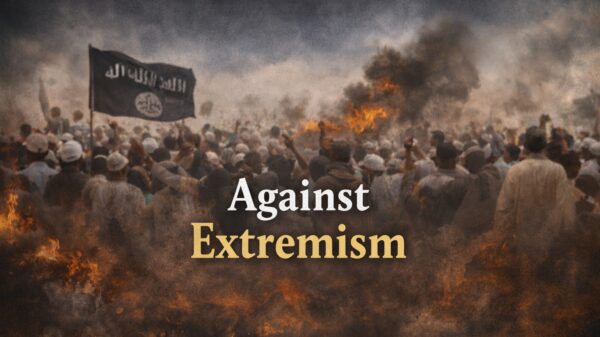
Attacks on minorities, destruction of temples or churches, and forced displacement are not only violations of the law; they stain the name of Islam itself.
When a minority citizen goes to sleep in fear, it is not just a personal tragedy it is a collective failure of society. Islam teaches that regardless of faith, the security of one’s neighbour is a shared responsibility. The Qur’an declares that killing one innocent person is like killing all of humanity. By this standard, the blood of a minority is equally sacred.
In today’s world, Islamophobia is a serious reality, just as minority neglect within Muslim societies is a hard truth. There is only one way out of this dual crisis: returning to the true teachings of Islam. Not the politics of power, but the politics of justice. Not the arrogance of numerical majority, but a deep sense of moral responsibility.
The role of the state does not end here. Law enforcement agencies, the administration, and the judiciary must be impartial and firm in protecting minorities. It should not be the identity or religion of the offender that matters—only the crime itself.
Islam teaches blind justice, where there is no room for favoritism. The incident from the reign of Caliph Umar (may Allah be pleased with him), where he personally ensured justice for a Jewish citizen, remains a guiding light even today.
Above all, social attitudes must change. Respect and empathy toward minorities must be cultivated through education, sermons, media, and family upbringing. Islam teaches us that difference in belief does not mean enmity coexistence is the path to peace.
Minority security is not the demand of a particular group; it is a moral test of Islam itself. If we truly claim to follow Islam, our actions must reflect it.
Wiping away a minority’s tears, standing beside them, and protecting their rights these are the real applications of Islam.
In the end, the question is simple: do we want to be powerful by being a majority, or great by being just? Islam shows us the second path. The choice is now ours.