
Not Terror, but Peace is the Path to Nation-Building
- আপডেট টাইম : বৃহস্পতিবার, ১৩ নভেম্বর, ২০২৫

Editor: Muhammad Zakir Hossain
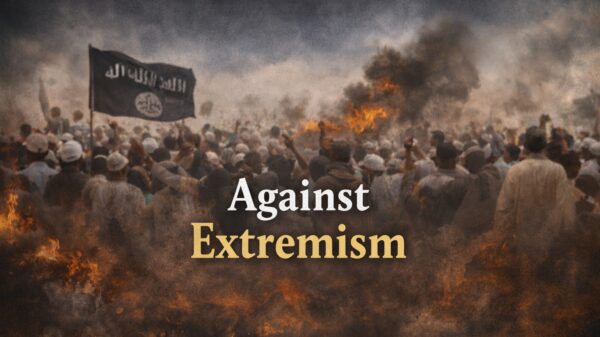
Every human being longs for peace, security, and a better life. But when injustice, poverty, and oppression by rulers become unbearable, some people, out of anger and frustration, take up arms. They believe that force can establish justice. This is how extremism begins. Yet history has shown time and again that a welfare-oriented state can never be built through violence or terrorism. The story of Syria’s current President, Ahmed Al-Shara, stands as a clear example.
Syria was once a beautiful and culturally rich nation. But for over a decade, the country has been ravaged by war and destruction. The people rose against the government demanding freedom and justice, but that movement soon turned into a bloody civil war. Various armed groups, foreign powers, and extremist organizations entered the scene—many claiming they were fighting for the people’s welfare. In reality, they destroyed the country’s peace and displaced millions.
Amid this chaos emerged Ahmed Al-Shara. He was once a leader of an armed faction who claimed to be fighting for national liberation. After years of war, power eventually came into his hands, and he became president. Although some order was restored under his rule, people’s suffering did not end. Fear, repression, and uncertainty continued to grow. This proves that while it may be possible to seize power through weapons, it is never possible to build a truly welfare-oriented state that way.
Why terrorism cannot build a prosperous state
1. A nation runs on trust, not fear
A state is built through the participation of its people. When citizens lose trust in their government, lasting peace and progress become impossible. Leaders who rise through violence usually rule by fear rather than respect. Fear may bring temporary control, but it never brings lasting harmony.
2. The ideology of terrorism is rooted in violence
No matter how much it is justified as a fight for justice, violence ultimately destroys. Extremism divides people, spreads mistrust, and drives away the educated and capable. In the end, the nation weakens and falls behind.
3. Lack of administrative experience and vision
Armed groups may know how to fight wars, but they do not know how to run a state. Managing education, health, agriculture, and the economy requires knowledge, planning, and cooperation. Without these, governance becomes chaotic and the welfare of citizens remains neglected.
4. No international cooperation
Governments or leaders with a background in militancy rarely gain the trust of other nations. As a result, foreign aid, investment, and diplomatic support become difficult to secure. The country grows isolated, the economy collapses, and ordinary people continue to suffer.
Ahmed Al-Shara may have believed that overthrowing an unjust regime through force would bring peace and prosperity to his people. But in reality, his government too remains troubled. Poverty persists, fear still grips many regions, and reconstruction moves slowly. Foreign investors stay away because of his militant past. Consequently, his people find it hard to place full trust in him.
This shows that even when intentions are noble, the wrong path can never lead to the right outcome. No matter how one comes to power, rule born of violence can never ensure the welfare of citizens.
A nation’s greatest strength lies in its people. When citizens can express their opinions freely, live safely, and have access to work and education, that is when true progress happens. Terrorism destroys all of this.
In a society consumed by violence, education stops, businesses close, healthcare collapses, children grow up in fear, women lose their sense of security, and the youth lose their future. This has been the tragic reality of Syria and many other nations.
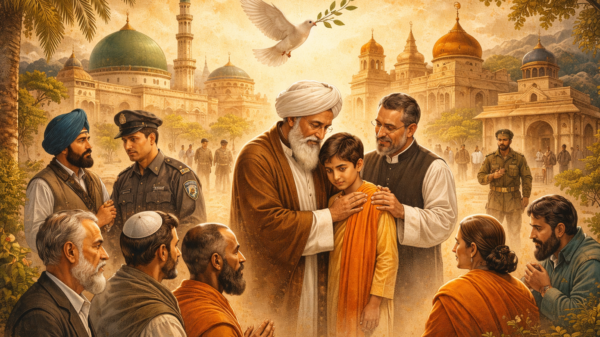
If people choose conversation over conflict, peace becomes possible. Terrorism may bring revenge for a moment, but it can never build the future. What Syria—and the world—needs most now is a culture of peace, where the new generation is guided away from violence toward education, humanity, and hope.
President Ahmed Al-Shara reminds us of a painful truth: it is easy to seize power through weapons, but impossible to bring welfare to people that way. A government born out of extremism may hold control for a while, but it will always lack the people’s trust—and that trust is the foundation of a strong nation.
Today’s world teaches us one thing clearly: the true pillars of a state are its people, education, justice, and peace.
Not terrorism, but dialogue is the road to progress.
If we truly wish to build a welfare state, we must abandon the path of violence and walk the path of humanity instead.