

Road Accidents: Urgent Action Needed to Stop a Silent Epidemic
- আপডেট টাইম : রবিবার, ২৯ মার্চ, ২০২৬
Editor : Muhammad Zakir Hossain
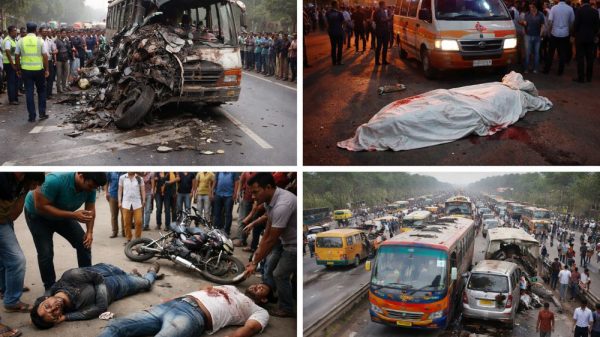
Road accidents are increasing at an alarming rate, turning into a silent epidemic that continues to claim lives every day. Reports of fatalities and injuries from different parts of the country have become a regular occurrence, highlighting serious weaknesses in road safety management and planning.
Several common factors contribute to these accidents. Reckless driving, excessive speed, violation of traffic rules, and unskilled drivers are among the leading causes. In addition, unfit vehicles, poor road conditions, and lack of proper monitoring further worsen the situation. In many cases, drivers engage in dangerous competition on the roads, significantly increasing the risk of fatal collisions.
What is most concerning is that these problems are not new. Despite being identified repeatedly over the years, effective and lasting solutions remain largely unimplemented. Although laws exist, their enforcement is often weak. As a result, many offenders escape accountability, which only encourages further negligence and lawlessness on the roads.
Addressing this crisis requires a coordinated and determined approach. First, traffic laws must be strictly enforced, and violations should be met with firm penalties. Second, driver training and licensing processes need to be more transparent and rigorous to ensure competence. Third, regular vehicle fitness checks and improvements in road infrastructure are essential to reduce risks.
Road accidents are not merely statistics; each incident represents a lost life, a grieving family, and a preventable tragedy. Ensuring road safety is therefore not just a policy issue it is a moral and social responsibility.
Immediate and effective action is essential. Without it, this silent epidemic will continue to take an even greater toll on society.