
Where Is Justice for Murder Victims? Bangladesh and the Crisis of Impunity
- আপডেট টাইম : শুক্রবার, ২৮ আগস্ট, ২০২৬
Human Rights Desk
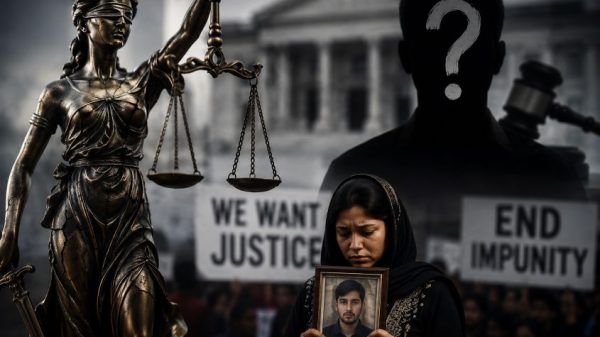
When a person is murdered, the tragedy does not end with the loss of a life. For the victim’s family, the pain often continues for years as they wait for an investigation, a trial and, ultimately, justice.
In Bangladesh, questions surrounding delays in murder investigations, prolonged court proceedings, political influence, witness intimidation and allegations of selective prosecution have repeatedly raised concerns about the effectiveness of the justice system. While it would be inaccurate to claim that murderers are never brought to justice, the long delays and unresolved cases have created a widespread perception among many families that justice remains out of reach.
For a country committed to the rule of law, this is not merely a criminal justice issue. It is a human rights issue.
Justice Delayed, Justice Denied
The journey from a murder to a final judgment can be complicated. A criminal case normally requires investigation, collection of evidence, identification and prosecution of suspects, witness testimony and judicial proceedings.
When any of these stages is delayed, the victim’s family suffers.
Evidence can become difficult to obtain. Witnesses may move away, become unavailable or face pressure. Families may struggle to pay legal expenses. In some cases, years can pass before a case reaches a final stage.
For the relatives of a murder victim, such delays are not simply administrative problems. They can mean years of uncertainty and emotional suffering.
The principle of justice requires not only that a case eventually reaches court, but also that investigations are conducted properly and that proceedings are completed within a reasonable period.
Are All Citizens Equal Before the Law?
One of the most sensitive questions surrounding criminal justice in Bangladesh is whether the law is applied equally to everyone.
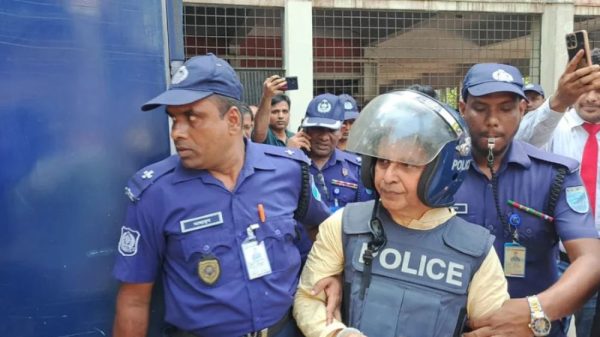
When an ordinary citizen is accused of a serious crime, police action may be swift. But allegations involving politically connected or influential individuals can sometimes generate questions about whether the same standards are being applied.
Human rights organisations have repeatedly raised concerns about political influence, arbitrary arrests and weaknesses in accountability mechanisms.
Human Rights Watch, in its 2026 World Report, highlighted continuing concerns over accountability for serious human rights violations in Bangladesh. The organisation also pointed to problems involving politically motivated cases and the need for stronger safeguards in the justice system.
The fundamental principle should be clear: political identity must neither protect an accused person from justice nor make an innocent person a target of prosecution.
The Legacy of Past Violence
Bangladesh has experienced several periods of serious political violence in which people were killed, injured or disappeared.
The violence surrounding the July-August 2024 protests brought the issue of accountability into renewed focus. A United Nations investigation estimated that as many as 1,400 people may have been killed during the unrest.
The scale of the deaths created an urgent demand for independent investigations and accountability.
Some of the cases have subsequently moved through Bangladesh’s legal institutions, including the International Crimes Tribunal. Such proceedings demonstrate the importance of investigating serious allegations.
But bringing cases to court is only the beginning.
For justice to be credible, proceedings must be based on reliable evidence, defendants must receive due process and victims and their families must have meaningful access to justice.
Accountability Must Be Evidence-Based
There is a danger in discussing justice only in terms of punishment.
After a major killing, public anger often creates demands for immediate arrests and severe punishment. But human rights principles require something more fundamental: a fair and independent judicial process.
An accused person is not automatically guilty simply because they have been arrested or charged.
Investigators must establish the facts. Prosecutors must present evidence. Defence lawyers must have the opportunity to represent their clients. Courts must make decisions independently.
This principle protects both victims and accused persons.
If an innocent person is punished because of political pressure or public anger, justice has not been achieved. At the same time, if credible evidence of a murder is ignored because the accused is powerful or politically connected, justice has also failed.
The Death Penalty Debate
Bangladesh retains the death penalty for certain serious offences, including murder.
Supporters argue that severe punishment is necessary for the most serious crimes. Opponents, including international human rights organisations, argue that the death penalty violates the right to life and that it cannot be reversed if a wrongful conviction occurs.
The debate became particularly visible in cases arising from the 2024 violence.
Amnesty International has argued that victims deserve justice and accountability but that the death penalty is not the answer. The organisation has also emphasised the importance of fair trials and due process.
Whatever position one takes on capital punishment, one principle should remain beyond dispute: every criminal case must meet the highest standards of fairness and evidence.
The Forgotten Victims
Public attention often focuses on the accused, the police investigation or the court verdict. Less attention is sometimes given to the families left behind.
A murder can destroy a family’s financial stability, particularly when the victim was the primary income earner.
Children may lose access to education. Elderly parents may lose their only source of support. Families may have to travel repeatedly between police stations, lawyers and courts.
For many families, justice means more than seeing an accused person punished. They want to know the truth about what happened to their loved one.
They also want recognition, dignity and protection.
A human rights-centred justice system must therefore ensure that victims and their families are treated with respect throughout the entire process.
What Needs to Change?
Improving the murder justice system requires institutional reforms rather than temporary political measures.
First, criminal investigations must be independent, professional and based on evidence rather than political influence.
Second, forensic investigation capabilities should be strengthened. DNA analysis, digital evidence, CCTV footage and other modern investigative tools can play an increasingly important role in solving serious crimes.
Third, witnesses must be protected from intimidation and retaliation.
Fourth, courts need sufficient resources to reduce unnecessary delays.
Fifth, prosecutors and investigators should be held accountable when investigations are deliberately delayed or evidence is mishandled.
Finally, the justice system must apply the same standards regardless of the accused person’s political connections, wealth, profession or social status.
Justice Must Be Equal
The statement that “murderers are never punished in Bangladesh” is too broad to describe every case. Many murder cases do reach the courts, and convictions are secured when prosecutors successfully establish guilt through evidence.
The deeper concern is whether every credible allegation receives an effective, impartial and timely investigation.
A functioning democracy cannot allow justice to depend on the identity of the victim or the power of the accused.
A poor family should have the same right to justice as the family of a wealthy or politically influential person. A politically powerful suspect should receive the same legal protections as an ordinary citizen—but should also face the same accountability if evidence establishes guilt.
A murder does not end when the victim dies. For the family, the struggle for justice may continue for years.
Bangladesh’s challenge is therefore not simply to increase the number of arrests or convictions. The greater challenge is to build a justice system in which investigations are impartial, trials are fair, witnesses are protected and victims’ families are treated with dignity.
Justice must not depend on wealth, political influence or social status.
A murderer should be held accountable when the evidence proves guilt. An innocent person should be protected from wrongful prosecution. And every victim’s family should have the confidence that the state will search for the truth and pursue justice without fear or favour.
That is not merely the responsibility of the courts.
It is a fundamental obligation of a state that claims to respect human rights and the rule of law.
Legal and editorial note: This report discusses broad human rights and justice-system concerns. Individual criminal cases should be assessed separately on the basis of verified evidence and court records.